Activity cubes and busy boards exist to solve one specific problem: giving a toddler several different things to fiddle with in one stationary spot, so they’re occupied for more than ninety seconds. They range from all-wood multi-side cubes to light-up electronic versions, and the right pick depends mostly on whether you want a quiet toy or one with sound.
Multi-Side Wooden Cubes
These are typically furniture-grade pieces meant to live in a nursery or playroom long-term, with each side offering a different fine-motor activity.
Battat Wooden Activity Cube CurioCity
A seven-sided cube with a city theme — railroad tracks, spinning gears, and hidden doors — offering more distinct activities per side than most competing cubes.
Bravmate 8-in-1 Wooden Activity Cube
A more compact cube with eight activities including a real xylophone and a detachable bead maze that can travel separately from the cube, plus a bonus sorting and stacking board.
Electronic/Light-Up Cubes
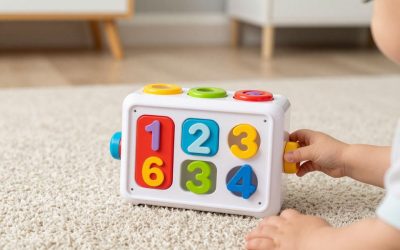
If you want sound, music, and spoken vocabulary built in rather than relying on whatever noise the toddler makes themselves, electronic cubes cover that.
VTech Busy Learners Activity Cube
A five-sided cube with 14 interactive features, a motion sensor, 25 songs, adjustable volume, and auto shut-off — the auto shut-off and volume control matter if the cube lives somewhere you’ll hear it often.
Portable Busy Boards
Busy boards trade the furniture-piece size of a cube for something closer to a flat panel or soft board that can travel in a diaper bag or car.
iPlay, iLearn 10-in-1 Baby Busy Board Cube
Packs ten activities — spinning toys, a whack-a-mole style element, and key matching — into a smaller footprint than a full activity cube, aimed at travel and car-seat tray use.
Sitodier 22-in-1 Toddler Busy Board
A flatter sensory board built around a shape sorter and bead maze, designed to fold or lie flat for packing rather than standing as furniture.
Another Electronic Pick
LeapFrog 3-in-1 Smart Learning Cube
LeapFrog’s cube pairs its usual electronic songs and phrases with shape-sorting and stacking elements, aiming to blend the mechanical-activity appeal of wooden cubes with the sound and vocabulary features of electronic ones rather than picking strictly one category or the other.
Budget Option
Amazon Basics Kids Wooden Activity Cube
A straightforward, lower-cost wooden cube for 12 months and up, useful if you want to try the activity-cube format before committing to a pricier multi-feature version.
Another Portable Pick
Fisher-Price Laugh & Learn Smart Stages Chair
Rather than a cube or flat board, this is a toddler-sized chair that doubles as an interactive busy-toy, with buttons and panels on the arms and back that play songs, numbers, and phrases while still functioning as actual seating furniture — a two-in-one option for a playroom with limited floor space for a separate activity cube.
Wood vs Electronic: Which Actually Holds Attention Longer?
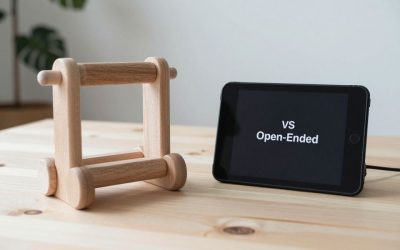
There’s no universal answer, but a pattern shows up across parent reports: electronic cubes tend to win the first few weeks because sound and lights grab attention fast, while wooden multi-activity cubes tend to get used for longer overall because there’s no battery to die and no single “trick” that gets boring once a toddler has pressed every button. If you’re only buying one, a wooden cube with several genuinely different mechanical activities (not just buttons) tends to have better long-term value.
Where to Put It
Activity cubes work best in a fixed spot a toddler returns to repeatedly — near a doorway, in a playroom corner — rather than being moved around, since part of their function is giving a toddler an independent “station” while a parent is nearby but not actively playing.
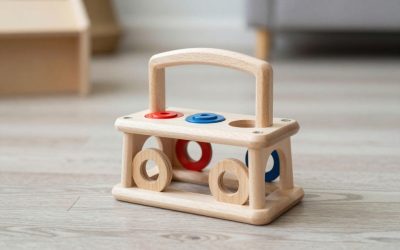
Durability is worth weighing against the number of activities a cube advertises, since a cube with ten flashy features is less useful if half of them break within a few months of toddler-level force. Wooden cubes with simple mechanical parts (gears, sliding beads, latches) tend to hold up to repeated rough handling better than cubes with thin plastic switches or small moving pieces that can snap off, so it’s worth reading reviews specifically for durability complaints rather than just counting the advertised number of activities per side. A cube that survives two years of daily toddler abuse is a better value than one with more features that breaks in month three.
FAQ
What age should a toddler start using an activity cube?
Most are rated for 12 months and up, though a toddler closer to 18-24 months typically gets more out of the fine-motor activities (bead mazes, gear spinning) than a 12-month-old who’s still mostly banging and mouthing pieces.
Are the electronic versions too loud?
Volume varies by model — look specifically for adjustable volume and auto shut-off (the VTech cube above has both) if noise in a shared living space is a concern.
Do busy boards need batteries?
Most portable busy boards (the mechanical, non-electronic kind) don’t — they rely on physical mechanisms like latches, zippers, and bead mazes rather than sound.
Is one activity cube enough, or do toddlers need multiple?
One is usually enough for a while — the “boredom” toddlers show after a few weeks is often about needing a change of room or routine more than needing a second cube. A smaller portable busy board as a second, travel-specific item tends to add more value than a second full-size cube.
Can an activity cube double as actual furniture, like the Laugh & Learn chair?
Some hybrid designs are built to function as real seating while also offering interactive panels, which can be a practical choice for a playroom or living room where a dedicated, furniture-only cube would otherwise take up extra space.
Do activity cubes help with specific developmental skills?
Yes — the fine-motor activities (gear spinning, bead mazes, latches) support hand-eye coordination and dexterity, while electronic cubes with vocabulary and counting features can support early language and number recognition, so a mix of both types covers more developmental ground than either alone.

Write Your Review
No reviews yet. Be the first to share your experience!