“Montessori toy” gets used loosely in toy marketing, but the actual idea behind it is simple: toys that are self-correcting (a toddler can see for themselves whether a piece fits, without a parent judging right or wrong), made of natural materials where practical, and built around one skill at a time rather than flashing lights and pre-recorded phrases doing the work for the child. For toddlers roughly 12 months through 3 years, that usually means wooden sorting, lacing, and building toys. Here are real options worth looking at.
Shape Sorting
Shape sorters are often a toddler’s first real introduction to the Montessori idea of self-correction — the piece either fits the hole or it doesn’t, and no adult needs to say so.
Melissa & Doug Shape Sorting Cube
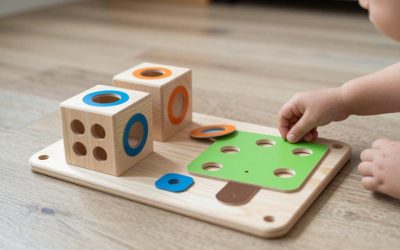
A classic wooden cube with 12 shapes across six sides, frequently cited as an Amazon’s Choice pick in this category and a dependable starting point if you only buy one shape sorter.
Fisher-Price Wood Montessori 1-2-3 Puzzle
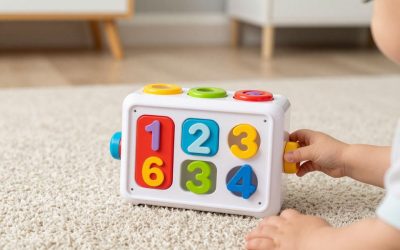
An Amazon Exclusive six-piece wooden puzzle that carries the American Montessori Society Seal of Excellence, aimed at toddlers around 2 years old working on number recognition alongside the sorting motion.
Fine Motor and Lacing
Threading and lacing toys build the pincer grip and hand-eye coordination toddlers will later need for buttons, zippers, and eventually writing.
Melissa & Doug Primary Lacing Beads
A set of chunky wooden beads and laces sized for toddler hands, which is typically easier for a first lacing toy than smaller bead sets meant for preschoolers.
Learning Resources Spike the Fine Motor Hedgehog
A wooden hedgehog with holes for pushing colorful quills in and out, which doubles as a sorting-by-color activity once a toddler is past the simple in-and-out stage.
Open-Ended Building
Unlike toys with one fixed outcome, building sets let a toddler decide what to make, which is a core Montessori principle — the toy follows the child, not the other way around.
Melissa & Doug 100-Piece Wooden Building Blocks Set
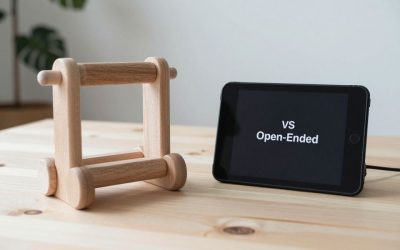
A large set of wooden blocks in varied shapes and colors stored in a wheeled wooden cart, giving enough pieces that a toddler can build something substantial rather than running out of blocks mid-project.
Stacking With a Developmental Angle
Not every stacking toy is interchangeable — some are designed around specific motor-skill research rather than just being rings on a post.
Lovevery The Wobble Stacker
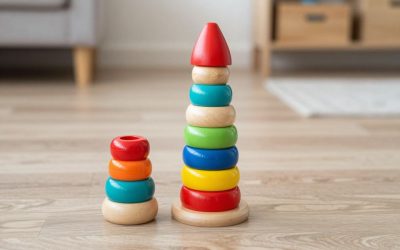
Built around child-development research with a rocking base and progressively sized rings, designed to teach cause-and-effect and balance rather than just stacking for stacking’s sake.
What Actually Makes a Toy “Montessori,” Beyond the Label
Three questions are more useful than the word on the box: Can the child see or feel whether they did it “right” without being told? Does the toy do one thing, or does it do everything (lights, sounds, voice) for the child? And is it sized and weighted for toddler hands specifically, not scaled down from a preschool toy? Wooden toys tend to score well on all three simply because wood doesn’t light up or talk, which forces the design to rely on fit, weight, and texture instead.
A Note on Age Ranges
Most of the toys above list a starting age around 12-18 months, but the honest marker is development, not the calendar. A toddler who still mouths everything may need a few more months with simpler, larger-piece toys (like the lacing beads or the wobble stacker) before moving to smaller shape-sorter pieces that could be a choking hazard if they’re still exploring toys by mouth.
FAQ
Do Montessori toys need to be made of wood to count?
No — wood is common because it’s naturally weighted and durable, but the Montessori principle is really about self-correction and single-purpose design, not the material itself. Some high-quality plastic toys follow the same logic.
My toddler ignores the “correct” way to use a Montessori toy. Is that a problem?
Not usually — open-ended exploration (stacking shape-sorter pieces instead of sorting them, for example) is still valuable play. Gentle modeling of the intended use over time, without forcing it, tends to work better than correcting every session.
How many of these does a toddler actually need at once?
Two or three in rotation is plenty. Montessori-influenced households often rotate toys in and out of reach every couple of weeks rather than leaving everything out, which tends to hold a toddler’s interest longer than a toy chest that’s always fully stocked.
Are these toys worth it if my toddler already has plenty of electronic learning toys?
They’re not a replacement so much as a different kind of practice — electronic toys are good at cause-and-effect and vocabulary repetition, while hands-on sorting and building toys build fine motor control and problem-solving in a way button-pressing doesn’t. Most toddlers benefit from some of both.

Write Your Review
No reviews yet. Be the first to share your experience!