New parents often get a bassinet and a crib on the registry without fully knowing why they need both. They serve different purposes for different ages, and knowing when to transition matters for safety, not just convenience.
Why Start With a Bassinet at All?
Bassinets are smaller, often more portable, and let a newborn sleep within arm’s reach of the parents’ bed, which lines up with the AAP’s room-sharing recommendation for at least the first six months. Most bassinets have a weight limit around 15-20 lbs and a shallow profile that isn’t appropriate once a baby can roll, push up, or sit — typically somewhere between 4 and 6 months. A crib, by contrast, is built for the long haul: deeper sides, a bigger footprint, and a weight limit well above 50 lbs, taking a child from infancy through roughly age 2-3.
There’s also a middle path worth knowing about: the full-size bedside sleeper. Products like the HALO BassiNest fall somewhere between a classic small bassinet and a crib, offering a mesh drop-side for close bedside access but a larger overall sleep surface and sometimes a slightly higher weight limit than a compact travel bassinet. For families short on bedroom space but not ready to move a full crib in on day one, a bedside sleeper or mini crib can collapse the bassinet-then-crib sequence into a single piece of furniture, which is worth factoring into your nursery budget and floor plan before buying both separately.
1. Chicco LullaGo Anywhere Portable Bassinet
The LullaGo Anywhere is built specifically for bedside use in tight bedrooms, which is the exact situation most new parents are dealing with in the newborn months.
Pros: Compact footprint that fits beside most beds; packs into its own travel bag; lightweight to move between rooms.
Cons: Like all bassinets, it’s a short-term purchase — expect to retire it by 4-6 months.
2. Dream On Me Aden 4-in-1 Convertible Mini Crib
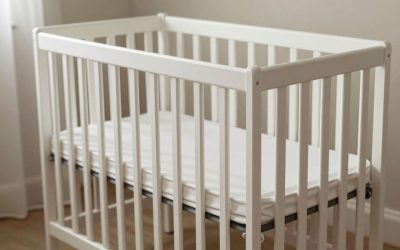
The Aden mini crib is a popular pick for parents who want crib longevity without a full-size crib’s footprint, converting through several stages as the child grows.
Pros: GREENGUARD Gold certified; multiple mattress height settings; smaller footprint than a standard crib.
Cons: Mini crib mattresses are a non-standard size, so replacement mattresses/sheets are a narrower market than full-size.
3. Delta Children Gio Mini Crib
The Gio is frequently named a top overall mini crib, with compact dimensions that fit into smaller nurseries or shared bedrooms without feeling cramped.
Pros: Genuinely compact dimensions; simple, sturdy construction; easier to fit through doorways than full-size cribs.
Cons: Shorter usable lifespan than a full convertible crib if you don’t plan to size up.
4. HALO BassiNest Swivel Sleeper
The HALO BassiNest bridges the gap between a basic bassinet and a crib with a swivel base and a mesh side that drops down level with the bed, letting a parent reach the baby without fully sitting up during nighttime feeds.
Pros: Swivels toward the bed for easy nighttime access; adjustable height to match different bed frames; breathable mesh sides.
Cons: Bulkier footprint than a simple compact bassinet, and still a short-term, newborn-stage purchase.
What About Cost Over Time?
Buying both a standalone bassinet and a separate full-size crib generally costs more in total than buying one mini crib or convertible crib that spans both stages, simply because you are purchasing two pieces of furniture instead of one. On the other hand, a dedicated bassinet is usually lighter and easier to move between rooms than even a mini crib, which matters if you want baby’s sleep space to follow the family around the house during the day for naps. Weigh the convenience of a lightweight, portable bassinet against the one-time cost savings of skipping straight to a mini or convertible crib based on your own living situation rather than assuming one path is automatically cheaper or more practical for every family.
Buying Tips
Don’t buy a bassinet expecting it to last past the newborn stage — budget mentally for the crib transition around month 4-6 regardless of which bassinet you choose. If your nursery or bedroom is tight on space, a mini crib (like the two above) can actually replace the bassinet-then-crib sequence with one piece of furniture that converts as your child grows.
FAQ
Do I need both a bassinet and a crib?
Not strictly — some families skip the bassinet and room-share using a crib-sized bedside sleeper, or go straight to a mini crib. A dedicated bassinet is mainly a convenience for the newborn months.
What’s the hard safety cutoff for bassinet use?
Once a baby can roll over or push up onto hands and knees, the shallow sides of a bassinet are no longer a safe containment, regardless of weight limit.
Are mini cribs as safe as full-size cribs?
Yes — mini cribs sold in the US have to meet the same CPSC slat-spacing and structural safety standards as full-size cribs.
Is a bedside sleeper like the HALO BassiNest the same thing as a bassinet?
It’s a close cousin — bedside sleepers generally offer a larger sleep surface and a mesh drop-side for bed-level access, while a classic compact bassinet is smaller and more portable but usually sits as a separate freestanding unit beside the bed rather than attaching alongside it.
Can we skip the bassinet entirely and go straight to a crib?
Yes, especially with a mini crib placed in the parents’ room for room-sharing — some families prefer this to avoid buying a short-lived bassinet at all, as long as the crib fits comfortably in the bedroom for the room-sharing period.





Write Your Review
No reviews yet. Be the first to share your experience!