Key takeaways
- GPU tier comes first. We focused on RTX 5060, RTX 5070 and RTX 5070 Ti laptops. In general, the higher the tier and the more power the GPU is allowed to draw, the more headroom you have for demanding headset games. Do not treat the entry tier as a guarantee for every title.
- RAM. 16GB is workable, 32GB gives more room when a game, a streaming app and a browser all run together.
- Ports. Headsets connect in different ways, so port selection matters. We list ports only where the sources do, and we make no claim that any laptop works with a particular headset.
- Cooling and noise. VR keeps the GPU busy for long sessions. We quote reviewer comments about noise and size where they exist.
- Honest data. We skipped models with stale deals, conflicting specs or only thin data.
Virtual reality is one of the most demanding things you can ask a laptop to do. A headset needs a high, steady frame rate for two eyes at once, and a stutter that is only annoying on a monitor can be uncomfortable in a headset. This guide to the best VR gaming laptops is therefore built around the graphics card first. If you are searching for the best laptops for VR gaming or the best gaming laptops for VR, the six machines below cover an entry tier (RTX 5060), a middle tier (RTX 5070) and a stronger tier (RTX 5070 Ti), all taken from published specs.
Important: these picks come from published specs and reviewer feedback, not hands-on testing. We did not test any of these laptops with a VR headset, and our sources do not state headset compatibility or VR frame rates. Prices are approximate, were not live-checked, and laptop prices change quickly, so confirm the current price and exact configuration before buying.
How We Picked Laptops for VR
Because our data does not cover VR performance directly, we chose by general hardware tier and flagged what the sources do and do not say.
- GPU tier comes first. We focused on RTX 5060, RTX 5070 and RTX 5070 Ti laptops. In general, the higher the tier and the more power the GPU is allowed to draw, the more headroom you have for demanding headset games. Do not treat the entry tier as a guarantee for every title.
- RAM. 16GB is workable, 32GB gives more room when a game, a streaming app and a browser all run together.
- Ports. Headsets connect in different ways, so port selection matters. We list ports only where the sources do, and we make no claim that any laptop works with a particular headset.
- Cooling and noise. VR keeps the GPU busy for long sessions. We quote reviewer comments about noise and size where they exist.
- Honest data. We skipped models with stale deals, conflicting specs or only thin data.
Check before you buy: every headset publishes its own PC requirements (GPU, video output, USB or wireless needs). Compare those requirements against the laptop’s exact configuration and ports. That step is yours to do, because we have not verified any headset pairing.
The 6 Best Gaming Laptops for VR
1. HP Omen 16 (RTX 5060, Ryzen 9 8940HX) — Best Lower-Cost Starting Point
This 2025 model pairs an RTX 5060 with a Ryzen 9 8940HX, 32GB of RAM and a 1TB SSD. It is listed around $1,149 to $1,280 on sale, with a list price reported closer to $1,579 to $1,750, so the deal matters a lot. The display is 16 inches, reported as 1920×1200 at 144Hz, though one retailer title suggests a different resolution, so verify it.
Pros: generous RAM and storage for the money. Cons: about 5.42 lb, and the price depends on sales. We found no battery figure. Best for: players who want the lowest-cost RTX route into VR and accept that the entry GPU tier has less headroom. Check HP Omen 16 on Amazon
2. Lenovo Legion Pro 5 Gen 10 AMD (RTX 5070) — Best Quiet Mid-Tier Option
The 16AFR10 version uses a Ryzen 9 9955HX, an RTX 5070 with 8GB of GDDR7, 32GB of RAM and a 1TB SSD with a 165Hz OLED panel. Its battery is 80Wh and the weight measured by Notebookcheck was about 5.03 lb, plus a separate power brick. Notebookcheck scored the RTX 5070 model 86.4 percent and highlighted it as quieter, cooler and more efficient. RAM can reportedly go up to 64GB.
Pros: strong review score, upgradable RAM. Cons: short battery life, weak speaker bass and a grainy webcam per Techlicious; on battery, 3D performance drops sharply (Notebookcheck measured only 18 percent of full performance). Prices range widely, from about $1,440 to $2,300. Best for: VR players who value lower noise and plan to play plugged in. Check Legion Pro 5 Gen 10 on Amazon
3. HP Omen Max 16 (RTX 5070) — Best When You Find a Discount
This Core Ultra 7 255HX model carries an RTX 5070 (8GB GDDR7), 16GB of RAM and a 1TB SSD. Display options vary by configuration, including a 1920×1200 165Hz IPS and 2560×1600 240Hz OLED or IPS choices. Up to 83Wh of battery is listed, though that may not apply to every configuration. The base price is about $2,300, while coupons and deals brought it near $1,350 to $1,600 in the sources.
Pros: display choices, frequent discounts. Cons: we found no dedicated RTX 5070 review. Reviews of higher-end Omen Max units mention very loud fans, a wobbly hinge and battery drops, so treat those as possible concerns, not confirmed ones. Best for: shoppers who can wait for a real discount. Check HP Omen Max 16 on Amazon
4. Gigabyte Aorus Elite 16 (RTX 5070) — Best Battery Capacity
The Aorus Elite 16 uses a Core Ultra 9 275HX with an RTX 5070 (8GB, up to 115W), 32GB of RAM, a 1TB SSD and a 2560×1600 165Hz screen. It has a 99Wh battery, Thunderbolt 5, Wi-Fi 7 and two SO-DIMM slots that accept up to 64GB. Notebookcheck scored it 84.4 percent.
Pros: large battery, modern connectivity, upgradeable memory. Cons: prices of roughly $2,000 to $2,250 put it near RTX 5070 Ti competition, and Notebookcheck questioned whether a premium RTX 5070 is worth it. We found no weight figure. Best for: players who want a high-resolution screen and room to upgrade. Check Aorus Elite 16 on Amazon
5. MSI Vector 16 HX AI (RTX 5070 Ti) — Best Value for the Stronger Tier
This Core Ultra 7 255HX model has an RTX 5070 Ti with 12GB of GDDR7 (up to 140W with Dynamic Boost), 16GB of RAM that can reportedly reach 64GB, and a 1920×1200 144Hz screen on the cheaper configuration. Listed ports include two Thunderbolt 5, a Type-A port, HDMI 2.1 and an SD card reader. Prices run from about $1,499 to $2,000, and it was among the cheapest 5070 Ti options we found. Notebookcheck scored it 84.
Pros: the 5070 Ti at a lower price, useful port list. Cons: loud under load and bulky (about 5.76 lb), a 512GB SSD on the base model and a modest screen on the cheap version. Best for: players who want the stronger GPU tier without paying flagship money. Check MSI Vector 16 HX AI on Amazon
6. Lenovo Legion Pro 5i Gen 10 (RTX 5070 Ti) — Best Screen in the Stronger Tier
This one combines a Core Ultra 9 275HX with a 140W RTX 5070 Ti (12GB GDDR7), 32GB of RAM, a 1TB SSD and a 16-inch 2560×1600 OLED panel, 240Hz on some configurations and 165Hz on others. It has an 80Wh battery, Wi-Fi 7 and weighs about 5.3 lb from a single source.
Pros: the 140W 5070 Ti plus OLED. Cons: no SD card slot, and prices are volatile. We saw anything from about $1,550 to over $2,100 depending on the seller and configuration, and some Lenovo pages showed much higher figures. Best for: players who want the best picture and plan to buy only at a verified price. Check Legion Pro 5i Gen 10 on Amazon
Practical Tips for Choosing a VR Laptop
Pick the GPU tier you can afford and avoid saving money on the graphics card in exchange for a nicer screen, since the headset has its own displays. Plan to play plugged in, because several reviews show a big performance drop on battery. Leave airflow around the vents and consider a cooling stand for long sessions, since the models above are bulky and some are loud. Finally, remember that wireless headset use depends on your Wi-Fi setup, so check that requirement too.
FAQ
What makes a good VR gaming laptop?
A strong dedicated GPU is the biggest factor, followed by enough RAM, good cooling and the right ports for your headset. Our picks are sorted by GPU tier from RTX 5060 to RTX 5070 Ti.
Will these laptops work with my headset?
We cannot say. Our sources do not confirm compatibility with any specific headset. Compare the headset maker’s published PC requirements with the laptop’s exact GPU, video output and USB ports before buying.
Is an RTX 5060 enough for VR?
It is the entry tier among our picks and can suit lighter titles, but it has less headroom than the RTX 5070 or 5070 Ti. If you want to play demanding games or raise visual settings, a higher tier is the safer choice.
Should I buy a gaming laptop or a desktop for VR?
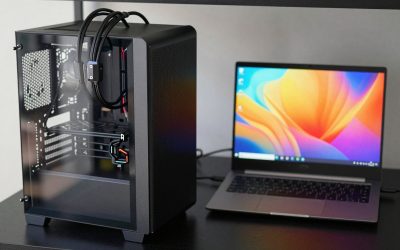
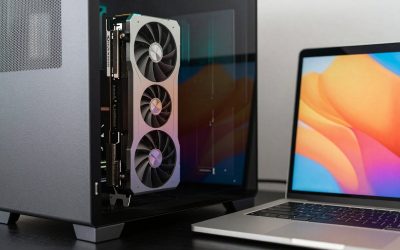
A desktop usually gives more performance per dollar and easier cooling. A laptop makes sense if you need portability. If you go with a laptop, the models above are a sensible shortlist, but check live prices because they change quickly.
Write Your Review
No reviews yet. Be the first to share your experience!