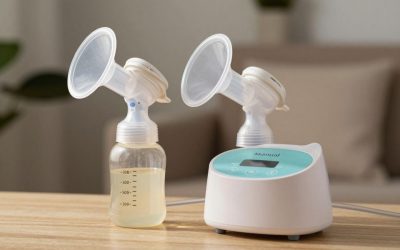
Whether you’re pumping to build a freezer stash, returning to work, or exclusively pumping, the right breast pump can make a noticeable difference in comfort and how much time it takes out of your day. The market has shifted heavily toward wearable, hands-free pumps in recent years, alongside the traditional plug-in double electric pumps. Here’s a comparison of real pumps worth knowing about.
1. Spectra S1 Plus
The Spectra S1 is consistently named a top overall pick by lactation consultants and reviewers, known for a strong, adjustable suction and a quiet motor compared to many hospital-grade alternatives. It includes a rechargeable battery, so it isn’t tied to an outlet.
Pros: Strong adjustable suction; rechargeable battery for portability; closed system design.
Cons: Still a traditional plug/tube pump, so not hands-free like wearable models.
2. Eufy S1 Pro Wearable Breast Pump
Eufy’s entry into the wearable category was rated highly in Forbes testing of in-bra pumps, fitting discreetly under clothing for pumping during a commute, at a desk, or anywhere a traditional pump setup isn’t practical.
Pros: Fully wireless and discreet under clothing; good for multitasking while pumping; app connectivity on some models.
Cons: Wearable pumps generally have a smaller milk collection capacity than traditional bottles.
3. Medela Pump in Style
Medela is one of the longest-established names in breast pumps, and the Pump in Style line remains a common choice, partly because of wide availability of replacement parts and insurance coverage in many plans.
Pros: Long-established brand with widely available parts; often covered through insurance programs; dual-phase expression technology.
Cons: Bulkier bag-style design compared to newer compact pumps.
4. Momcozy M5 Wearable Pump
Momcozy has built a strong following with budget-friendly wearable pumps, and the M5 is a frequently cited pick for parents who want hands-free pumping without the premium price of some competitors.
Pros: More affordable than premium wearable brands; hands-free, fits in a regular bra; multiple suction levels.
Cons: Battery life and suction strength trail some higher-end models.
5. Haakaa Manual Silicone Pump
The Haakaa is a simple, no-battery silicone pump that works by suction alone — squeeze, attach, and let it catch letdown or hand-express milk. It’s a low-cost addition many parents keep alongside an electric pump for quick single-session use.
Pros: No batteries or motor to fail; very low cost; easy to clean (few parts).
Cons: Not a substitute for an electric pump for regular full sessions or exclusive pumping.
6. Elvie Stride Wearable Breast Pump
Elvie’s Stride sits between a fully in-bra wearable and a traditional pump, using a compact motor unit attached to a closed-system cup that is quieter than most wearable competitors. It is frequently cited in reviews for a strong suction-to-noise ratio, which matters for parents pumping in shared workspaces.
Pros: Notably quiet motor; closed-system hygiene design; app-based session tracking.
Cons: Premium price similar to or above the Eufy S1 Pro.
7. Lansinoh Signature Pro Double Electric Breast Pump
Lansinoh’s Signature Pro is a frequently recommended budget-friendly traditional double electric pump, offering adjustable suction levels and a closed system at a price point well below Spectra or Medela, making it a common pick for parents who pump occasionally rather than exclusively.
Pros: Lower price than most double electric pumps; closed system; simple two-button interface.
Cons: Less powerful suction ceiling than Spectra’s higher-end models.
Buying Tips
Flange (breast shield) size matters more than most people expect — an ill-fitting flange is the most common cause of poor suction or discomfort, and most pumps are sold with a couple of size options or separate size kits. If you’re returning to work, check your insurance plan first, since many U.S. plans cover a pump at no or reduced cost under the Affordable Care Act. Wearable pumps are great for mobility but check their stated capacity per side against how much you typically pump per session before relying on one exclusively.
Noise level and discretion matter more than most first-time pumping parents expect, especially for anyone pumping at a desk, in a car, or in a shared office pumping room. Traditional plug-in pumps vary widely in motor volume, and even some wearable pumps marketed as “quiet” still produce an audible hum in a silent room, so it is worth checking independent decibel comparisons or user reviews that specifically mention noise rather than relying on marketing copy. It is also worth having a backup plan — a manual pump like the Haakaa, or simply hand expression — for situations where your primary pump’s battery dies or a part goes missing right before a session.
FAQ
Is a wearable pump as effective as a traditional electric pump?
For many parents, yes, though effectiveness depends heavily on flange fit and suction strength, which still varies by brand and model regardless of wearable vs. traditional design.
How do I know what flange size I need?
Most brands provide a sizing guide based on nipple diameter; if you’re using one size but experiencing pain or poor output, that’s usually the first thing to check and adjust.
Can I get a breast pump covered by insurance?
In the U.S., most insurance plans are required to cover at least one breast pump per pregnancy under the ACA — check with your provider or the pump manufacturer’s insurance portal for eligible models.
How often do pump parts need to be replaced?
Valves and membranes typically wear out and lose suction efficiency after a few months of regular use, even if they look intact, so most manufacturers recommend replacing them roughly every 30-60 days of regular pumping rather than waiting for a visible failure.
Can a wearable pump be used for exclusive pumping?
Some parents do use wearable pumps exclusively, but many lactation consultants suggest keeping at least one traditional, stronger-suction pump in rotation if milk supply or output is a concern, since wearable pumps generally cap out at a lower maximum suction than top-tier traditional models.



Write Your Review
No reviews yet. Be the first to share your experience!